Seasonal pest pressure in Central Ohio fluctuates alongside temperature swings and soil moisture levels recorded by the State Climate Office of Ohio . Exterior perimeter treatments establish an invisible protective…
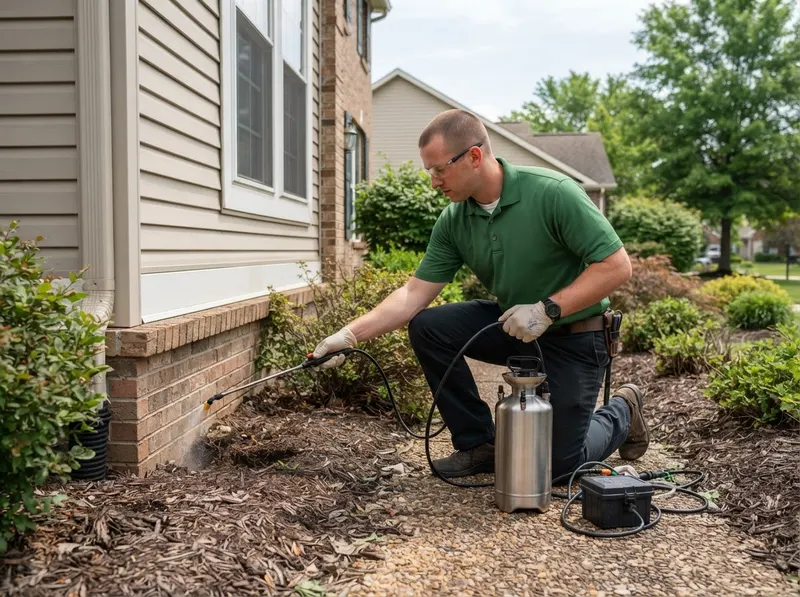
Seasonal pest pressure in Central Ohio fluctuates alongside temperature swings and soil moisture levels recorded by the State Climate Office of Ohio. Exterior perimeter treatments establish an invisible protective perimeter that neutralizes insects before they enter the living envelope, preventing the sudden indoor discoveries that disrupt family comfort. Homes bordering mature tree canopies in Clintonville and Worthington often encounter heavy spring migrations of odorous house ants and subterranean termites seeking shelter as damp ground warms. Applying microencapsulated liquid insecticides directly to foundation masonry binds the active ingredient to concrete, brick, and stone, providing weather-resistant residual action that adheres to guidelines from the US EPA Pesticide Program. This exterior focus avoids indoor chemical applications entirely, eliminating chemical odors and keeping living rooms and nurseries free of residual treatments.
During late summer and autumn, dropping overnight temperatures trigger aggregate movements of brown marmorated stink bugs and boxelder bugs looking for overwintering voids inside structural walls. In dense historic districts like German Village and Victorian Village, older stone foundations and decorative brick joints offer entry points that require specialized mechanical and chemical exclusion. Technicians apply water-resistant synthetic pyrethroids regulated under the Ohio Department of Agriculture Pesticide Regulation, pairing them with water-activated granular barriers pushed 10 feet outward into turf and garden beds according to principles from the Ohio State University Extension. This dual-band perimeter targets arthropods at the soil level while stopping upward vertical climbers before they reach sill plates, window casings, or crawlspace vents.
Properties situated near river corridors, such as the Scioto Mile or lower Franklinton, face elevated humidity and seasonal pest surges from peridomestic American and oriental cockroaches nesting in municipal utility trenches. Perimeter management avoids the disruption of indoor fumigation or wall-void aerosol injections, allowing children and pets to remain indoors without relocation. According to standards curated by the National Pesticide Information Center, microencapsulated products bond to surfaces within 60 to 90 minutes of application, after which treated lawn edges and patio stones are safe for routine family and pet access. By stopping outdoor pests at the foundation edge, homes in Grandview Heights, Upper Arlington, and Bexley maintain continuous defense against structural intrusion without spreading persistent chemicals through indoor air.
Perimeter treatment scopes are engineered around the lifecycle patterns defined by the Entomological Society of America. Spring applications target foraging worker ants emerging from winter dormancy, summer treatments fortify barriers against turf pests and web-building spiders, and autumn protocols focus on overwintering prevention. Foundation crack seals follow physical maintenance practices recognized by the International Code Council to reinforce the chemical line of defense. When foundation plantings directly contact siding, technicians trim vegetative bridges to meet structural clearance advisories published by the Purdue Extension IPM, ensuring crawling pests cannot bypass the treated footprint. By combining non-repellent barrier formulations verified by the Pest Control Technology technical registry with precise exterior placement, OakVanta Bug Specialists delivers reliable structural defense without requiring disruptive interior treatments.
Every job gets a firm, written price after a free on-site visit.
Tell us about your seasonal perimeter pest defense job in Columbus and we'll send a clear, written quote, usually the same day.
 OakVanta Bug Specialists