Columbus residential structures face distinct pressure from wood-destroying black carpenter ants and ground-nesting pavement ants due to regional moisture dynamics and historic architectural construction. In…
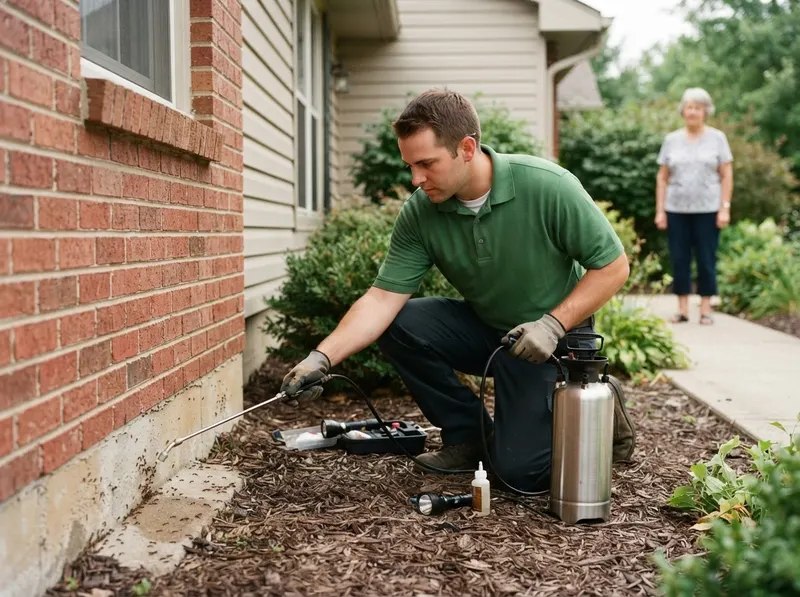
Columbus residential structures face distinct pressure from wood-destroying black carpenter ants and ground-nesting pavement ants due to regional moisture dynamics and historic architectural construction. In established neighborhoods such as Clintonville, German Village, and Victorian Village, mature oak canopy shade and historic stone masonry foundations retain elevated moisture, creating prime harborage for carpenter ant satellite colonies. According to the Ohio State University Extension, carpenter ants do not consume wood but hollow out moist structural framing to build brood galleries, generating piles of coarse sawdust known as frass. OakVanta Bug Specialists evaluates structural timber integrity along roof valleys, window aprons, and crawl spaces rather than relying on indiscriminate broadcast sprays. Routine over-the-counter pyrethroid sprays cause colony budding, wherein stressed colonies fracture into multiple self-sustaining sub-colonies throughout the wall framing. Proper structural remediation relies on slow-acting fipronil or indoxacarb chemistries regulated under the United States Environmental Protection Agency, which foraging workers carry back to feed the queen via trophallaxis.
Pavement ants present a separate biological challenge along masonry interfaces in dense urban corridors like the Short North, Franklinton, and Grandview Heights, as well as expansive driveways across Upper Arlington, Bexley, and Worthington. These ants construct subterranean nests beneath concrete slabs, emerging through expansion joints, foundation stress fractures, and brick patios to push up characteristic soil mounds. Managing these nests requires targeted macro-gel baits deployed in tamper-resistant stations rather than surface contact toxins that dissipate rapidly under UV exposure. Guidelines from the Pest Control Technology Technical Resource Center document that non-repellent liquid perimeters applied along the exterior foundation stop pavement ants from establishing interior foraging highways during spring thaw cycles. Technical standards maintained by the National Pest Management Association confirm that bait palatability must balance carbohydrates and proteins depending on whether the colony is rearing reproductive larvae or maintaining general worker vitality.
Decision guidance dictates structural protocols based on insect biology and property layout. If coarse wooden frass or large black ants measuring 0.25 to 0.5 inches are visible around historic fascia boards near Franklin Park Conservatory or older homes in Hilltop, the property requires structural void probing and high-pressure aerosolized desiccant dusting directly into framing cavities. If fine soil piles emerge between masonry pavers or under kitchen baseboards with tiny 0.1-inch workers trailing water sources, exterior perimeter trenching and granular bait barriers provide the correct technical response. Treating structural timber requires access to crawl spaces and plumbing walls, whereas pavement ant management concentrates on exterior masonry footers, driveway joints, and entry thresholds. OakVanta Bug Specialists uses non-volatile formulations that dry completely within 45 to 60 minutes, avoiding unpleasant airborne odors or lingering chemical residues, which aligns with the safety benchmarks published by the National Institute for Occupational Safety and Health.
Effective ant remediation follows a precise operational sequence. First, technicians map exterior moisture gradients, tree branch contact points, and plumbing dampness using thermal imaging tools to isolate active galleries. Second, non-repellent transfer solutions are applied to exterior stem walls using equipment calibrated to Ohio Department of Agriculture Pesticide Regulation application standards. Third, interior structural voids harboring carpenter ant satellite colonies receive micro-injections of targeted desiccant dusts. Fourth, outdoor paver lines and perimeter perimeters are treated with protein-carbohydrate matrix baits meeting guidelines from the University of Kentucky Department of Entomology. Fifth, a follow-up assessment occurs at 21 days to evaluate the complete suppression of brood activity, in accordance with principles outlined by the Entomological Society of America. Structural wood repairs can then proceed safely without the risk of ongoing structural timber excavation.
Every job gets a firm, written price after a free on-site visit.
Tell us about your carpenter and pavement ant management job in Columbus and we'll send a clear, written quote, usually the same day.
 OakVanta Bug Specialists