Securing a licensed pest control service in Columbus protects property structural integrity and indoor environmental quality from persistent regional insect and vertebrate pressures. OakVanta Bug Specialists applies targeted, non-repellent liquid perimeter barriers, biological insect growth regulators, and physical exclusion hardware tailored to central Ohio microclimates.
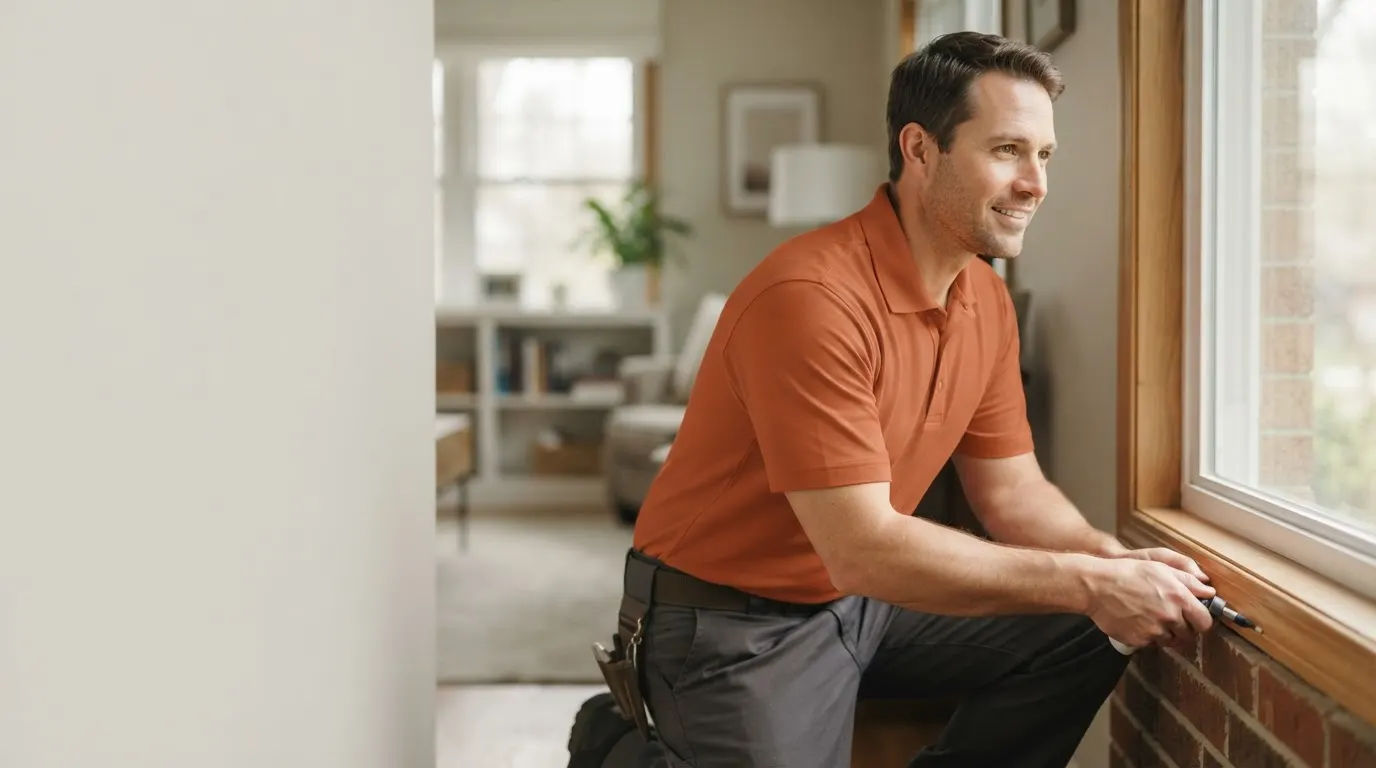
Pest control service in Columbus is a specialized biological and chemical management protocol executed by state-certified technicians to eliminate insect and rodent populations from residential and commercial structures throughout Franklin County.
Every service reflects the same meticulous attention to detail, whether it's a single job or a larger pest control service project across Columbus.
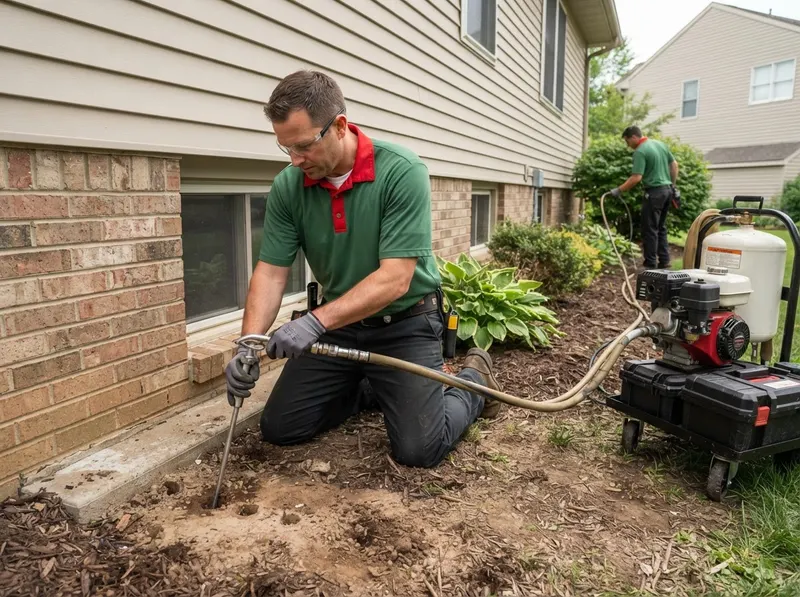
Termite remediation targets native subterranean colonies using non-repellent liquid termiticides applied via sub-slab injection and foundation trenching alongside hexaflumuron or noviflumuron monitoring bait stations. Technicians align all applications with the U.S. Environmental Protection Agency (EPA) standards and Ohio Department of Agriculture pesticide regulations . This dual-zone approach creates an uninterrupted chemical barrier through exterior soil zones while worker termites transfer slow-acting active ingredients back to the central subterranean queen, resulting in complete colony structural elimination without disturbing interior drywall finishes. Subterranean termite swarm season peaks from late March through May during humid post-rain warmups, requiring early spring inspections. Soil trenching involves excavating a continuous 6-inch by 6-inch trench adjacent to load-bearing foundation walls, saturating the backfill with finished termiticide emulsion at four gallons per ten linear feet per foot of depth, effectively insulating sub-grade sill plates and structural basement framing from subterranean exploration tubes.
Get a quote →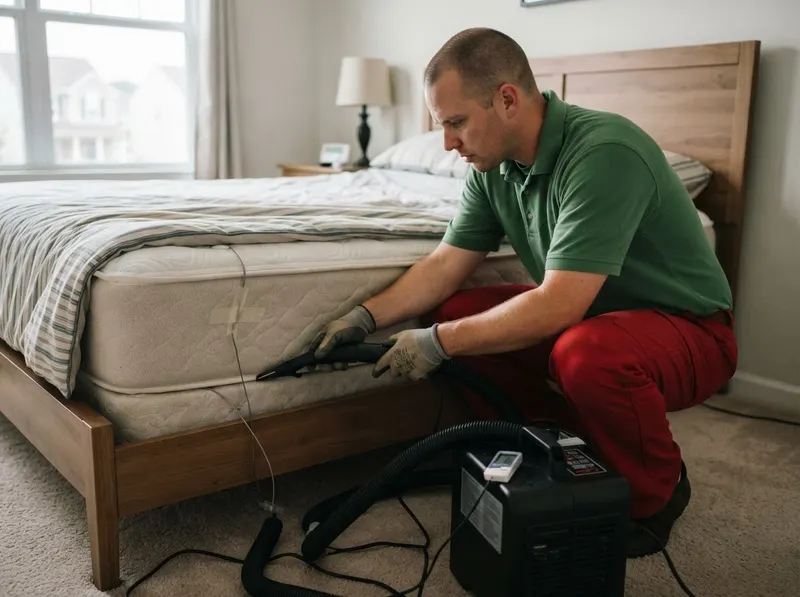
Bed bug intervention combines precision thermal technology with dual-action insect growth regulators and desiccant dusts. High-output structural heaters elevate localized room temperatures between 120°F and 135°F to achieve total protein denaturation across all life stages, including heat-resistant egg chorions. Following thermal exposure, technicians inject amorphous silica dust into wall voids, outlet boxes, and baseboard junctions to establish a multi-month preventative barrier that prevents re-infestation from unaddressed luggage or adjacent multi-unit corridors. Thermal probes positioned throughout mattress cores, heavy structural upholstery, and subfloor junctions continuously log thermal transfer data to ensure uniform lethal heat retention without causing thermal damage to delicate residential electronics or synthetic structural building fabrics. Technicians conduct post-treatment inspections using high-intensity ultraviolet illumination and biological protein testing to verify the total elimination of reproducing reproductive pairs.
Get a quote →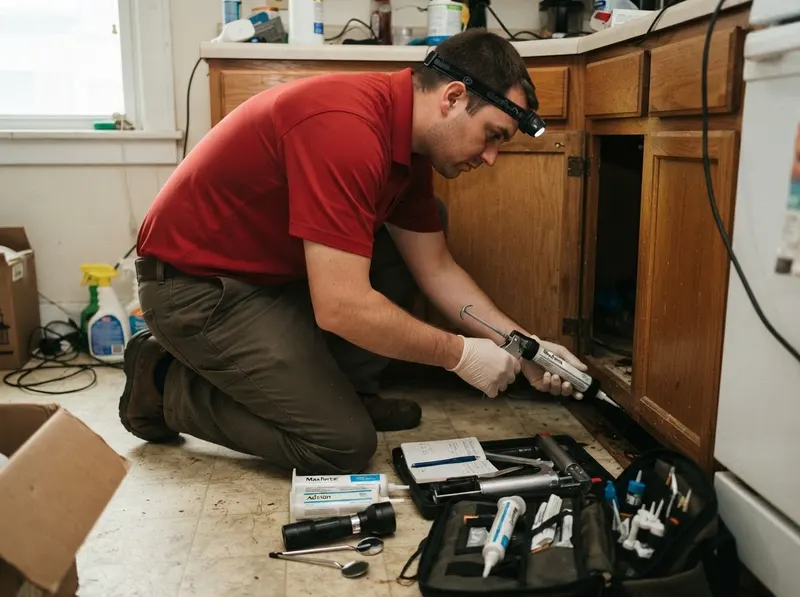
Cockroach eradication utilizes species-specific abatement strategies tailored to habitat biology. German cockroach populations within food-handling and plumbing environments are eliminated using indoxacarb and hydramethylnon micro-gel baits paired with insect growth regulators that disrupt chitin synthesis, avoiding repellent pyrethroid sprays that scatter nymphs into wall voids. Large-peridomestic American and Oriental cockroaches originating in damp utility corridors and municipal sewer lines are controlled using macro-crystalline moisture-resistant perimeter barriers and mechanical drain seals compliant with Franklin County public health standards . Targeted bait matrix placement focuses on localized heat sources, motor housing cavities behind commercial refrigeration units, underside structural lip brackets on kitchen countertops, and pipe escutcheon wall penetrations where relative humidity ranges between 60% and 80%, providing foraging nymphs with high-palatability dietary baits that halt female ootheca production.
Get a quote →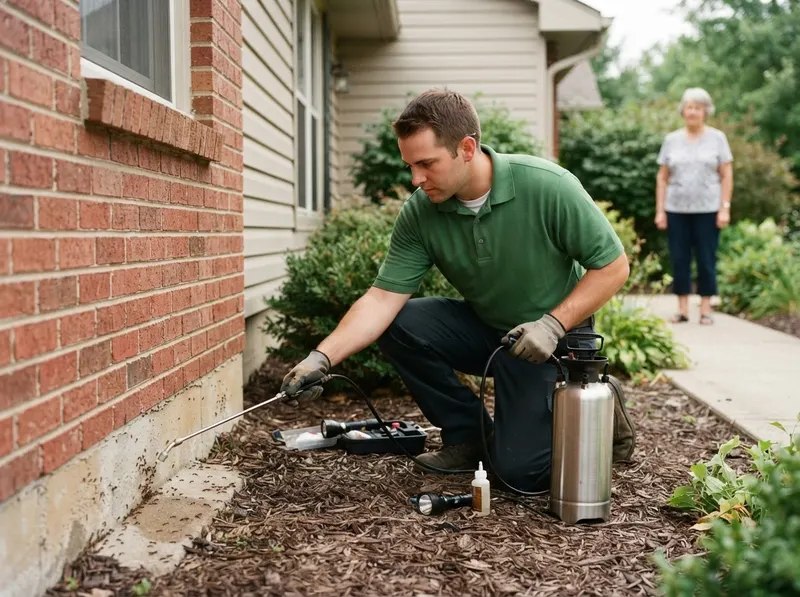
Ant management protocols differentiate between soil-nesting pavement ants and wood-destroying structural carpenter ants. Treatment starts with trailing pattern inspections to identify subterranean or satellite nests inside wall voids, insulated roof lines, and damp sill plates. Technicians deploy slow-acting fipronil liquid or granule bait formulations that foraging workers transport back to the primary colony, alongside targeted non-repellent perimeter applications around home foundation perimeters, deck attachments, and mature tree overhangs touching exterior building envelopes. Field crews systematically map out satellite nesting sites beneath flat exterior masonry pavers and window head jambs, injecting non-expanding insecticidal aerosols directly into structural hollows to eliminate parental reproductive queens without relying on broadcast surface chemical treatments that disrupt beneficial garden soils.
Get a quote →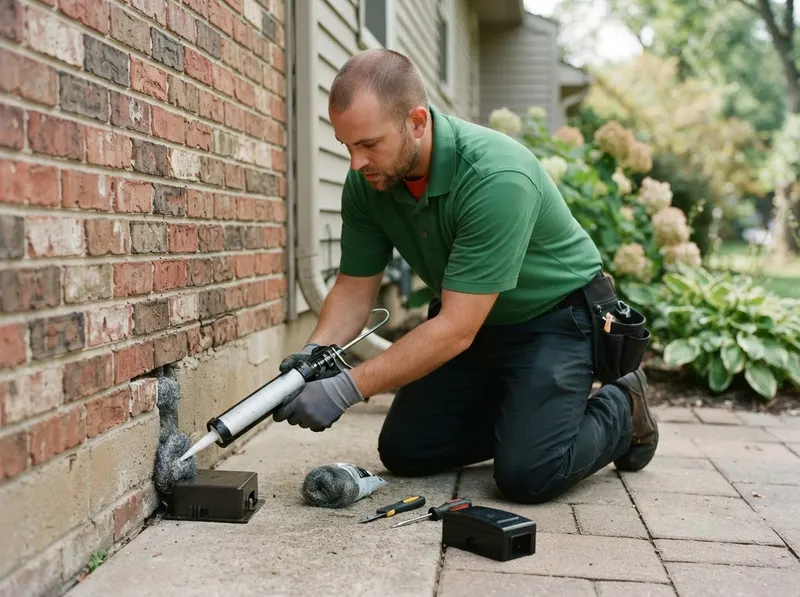
Rodent control targets house mice (Mus musculus) and Norway rats (Rattus norvegicus) utilizing mechanical snap traps, tamper-resistant exterior bait enclosures, and comprehensive structural exclusion. Crews conduct thorough foundation inspections, sealing sub-quarter-inch voids around gas conduits, electrical raceways, crawlspace vents, and garage door weatherstripping using 16-gauge galvanized steel mesh and chew-proof expanding foams, adhering to municipal guidelines outlined by the City of Columbus Department of Public Health . Rodent exclusion and interior baiting demand surges October through December as mice seek shelter from dropping temperatures. Structural technicians install heavy-duty dual-seal bottom sweeps across overhead vehicle garage doors and line structural crawlspace floor transitions with heavy vapor barriers to deter subterranean tunneling along subsurface perimeter footers.
Get a quote →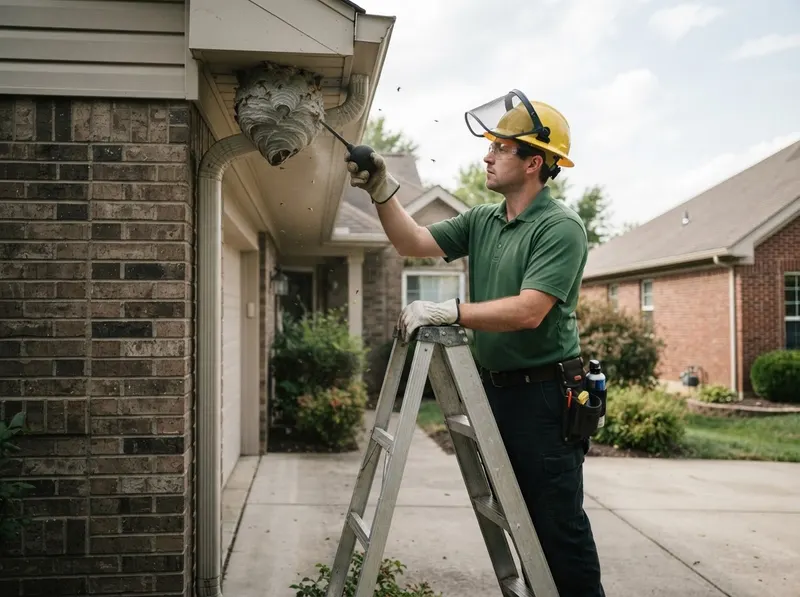
Wasp, hornet, and yellowjacket abatement removes dangerous aerial and subterranean nesting structures from structural eaves, soffits, chimney crowns, and ground hollows. Applying rapid freeze agents and pyrethrin aerosol flushes neutralizes defensive female workers instantly on contact, allowing safe physical detachment of paper and baldfaced hornet nests. Ground nests are treated via direct powder injection into subterranean voids to prevent late-summer colony expansion and stinging hazards across outdoor recreational spaces. Mosquito, tick, and stinging insect (wasps/hornets) treatments peak June through August across Franklin County yards. Technicians utilize microencapsulated pyrethroid foliage treatments applied via motorized mist blowers along property brush lines, underneath architectural decking assemblies, and beneath hardwood forest canopies to arrest flying queens before brood construction begins.
Get a quote →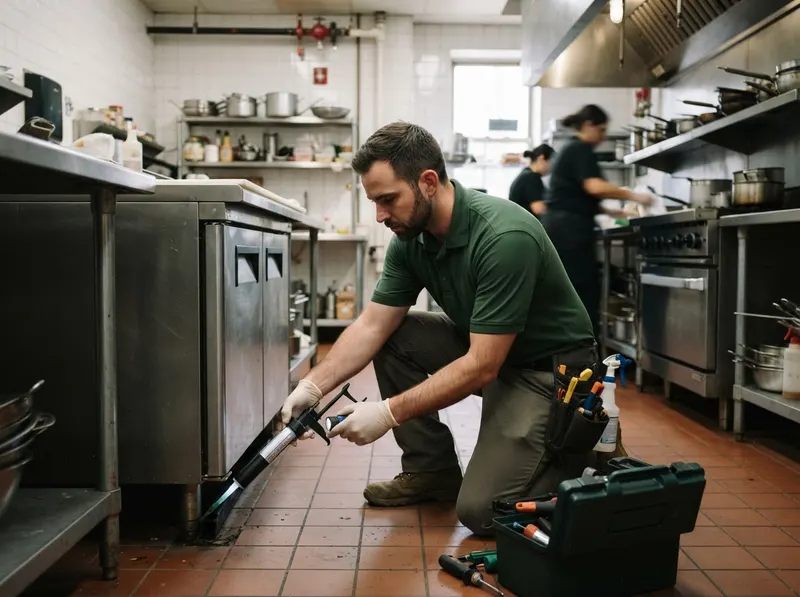
Commercial pest services provide food-handling facilities, industrial logistics warehouses, and multifamily complexes with rigorous monitoring documentation meeting third-party audit specifications. Implementation includes barcoded insect light traps, pheromone monitoring blocks for stored product pests, non-toxic monitoring boards, and precise crack-and-crevice applications adhering strictly to the FDA Hazard Analysis Critical Control Point (HACCP) guidelines to prevent supply chain contamination. Detailed electronic logbooks record electronic capture counts, threshold trend lines, structural moisture readings, and sanitization deficiency notes across critical production checkpoints, satisfying commercial regulatory review bodies such as the United States Department of Agriculture (USDA) and municipal health sanitarians during mandatory inspections.
Get a quote →Seasonal perimeter pest treatments focus on continuous exterior defensive boundaries around residential foundations to intercept seasonal invaders including brown marmorated stink bugs, boxelder bugs, multi-colored Asian lady beetles, and ground spiders. High-volume hydraulic power sprayers apply microencapsulated suspensions to foundation masonry, window casings, door thresholds, and eaves up to a height of three feet, creating an impenetrable chemical barrier that repels pests before they penetrate the thermal building envelope. These weather-resistant residual suspensions adhere directly to rough structural surfaces, such as split-faced architectural block and untreated cedar trim, resisting photolytic breakdown from direct sunlight and heavy rainfall throughout wet spring and humid summer months.
Get a quote →You get a firm, itemized quote for your pest control service before any work begins, no surprises, no pressure.
Careful prep, tidy work, and a full cleanup when we are done. We treat your home and belongings like our own.
The same trusted, background-checked team from the first call to the final check.
Selecting the appropriate level of pest management depends directly on the biological reproduction rate of the target species, the architectural construction of the property, and the confirmed presence of structural nesting versus transitory foraging. If you detect sporadic outdoor invaders such as American cockroaches, pavement ants, or seasonal crickets entering through exterior thresholds, choose an exterior perimeter barrier with baseline exclusion. html">Cimex lectularius (bed bugs), German cockroaches nesting inside kitchen cabinetry, or subterranean termites feeding on sill plates, choose an intensive multi-phase interior flush paired with microencapsulated residual bait systems.
The trade-off between exterior preventative maintenance and comprehensive interior eradication involves preparation requirements and structural accessibility: perimeter applications require no furniture movement or interior vacate periods, whereas interior corrective treatments require detailed room preparation, targeted mechanical vacuuming, crack-and-crevice bait placements, and brief structural ventilation to achieve complete reproductive mortality without displacing specimens deeper into wall assemblies. When deciding between structural heat remediation and multi-round chemical residual applications for parasitic insects, property owners must evaluate downtime against long-term residual coverage. Thermal remediation achieves immediate single-day lethal thermal limits across all egg and adult instars within isolated living spaces, eliminating the need to discard high-value furniture or personal belongings; conversely, non-thermal micro-aerosol and desiccant dust applications require two to three successive treatment intervals spaced 14 days apart to interrupt newly emerged nymphs while offering an ongoing defensive barrier against reintroduction from adjacent multi-unit corridors.
For wood-destroying organisms like carpenter ants or subterranean termites, topical wood surface sprays provide immediate surface relief but fail to eradicate subterranean parent brood chambers located three to six feet below subgrade soil strata; subterranean colony elimination requires dedicated pressurized sub-slab termiticide injections or external monitoring bait stations that systematically dismantle the queen's caste hierarchy through slow-acting chitin synthesis inhibition.
Every project gets a firm, written price after a free on-site visit. Ranges below for orientation.
Tell us about your pest control service job and we'll send a clear, written quote, usually the same day. Or just call and talk to a real Columbus pro.
(216) 682-2040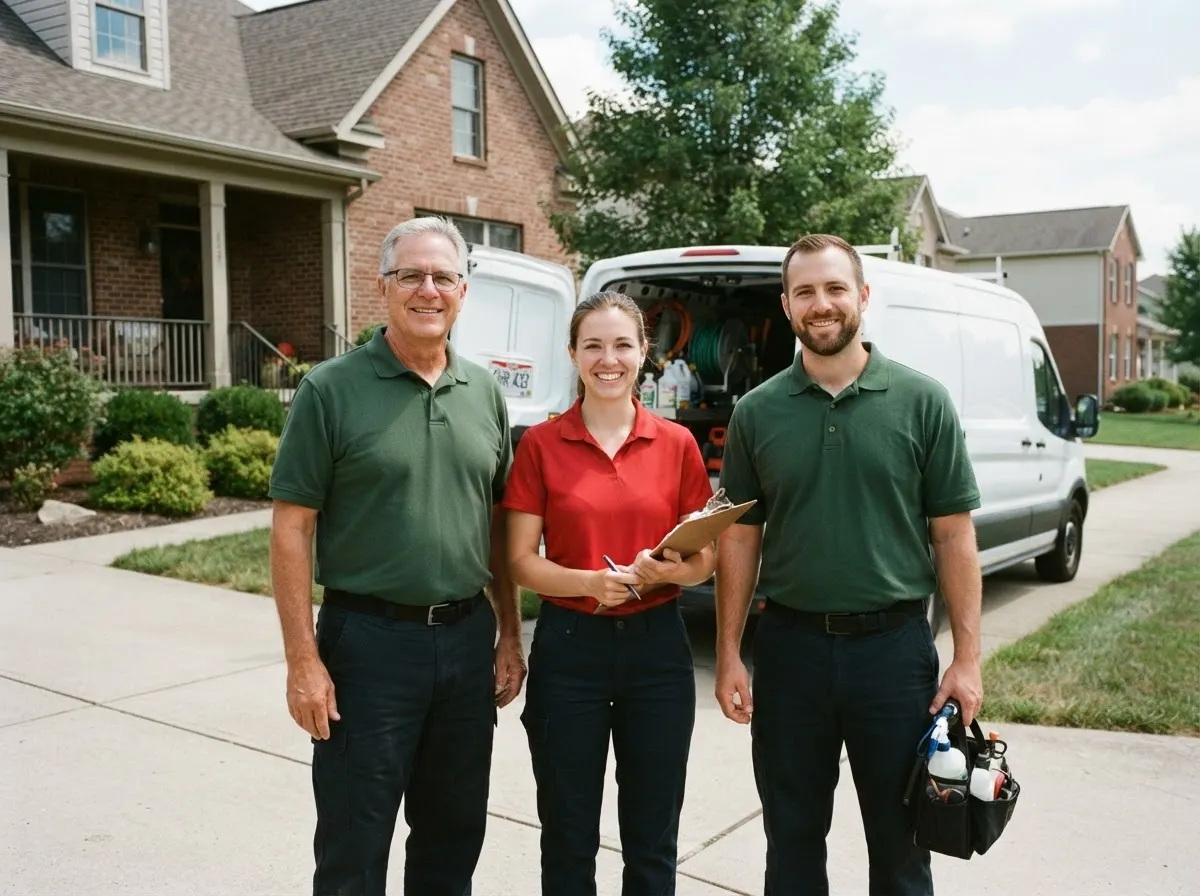
Properties across central Ohio encounter intense pest pressures shaped by regional geology, river corridors, and aging architecture. Historic brick foundations and sandstone cellars throughout German Village and Victorian Village present natural sub-grade fissures that invite field mice and subterranean termites traveling upward from moist Scioto River and Olentangy River bottoms. Meanwhile, dense tree canopies in Clintonville and Bexley channel roof rats, carpenter ants, and stinging hornets directly into soffits and slate roof lines, demanding localized microencapsulated barrier protocols calibrated for Ohio's humid summer cycles and hard winter freezes. In low-lying, clay-heavy drainage basins flanking Franklinton and the Scioto Mile, elevated groundwater tables maintain persistent subsoil dampness, accelerating the fungal decay of subterranean structural framing members and creating prime harborage conditions for eastern subterranean termites and wood-boring beetles. Older frame homes in Grandview Heights and Worthington frequently feature unexcavated, earth-floored crawlspaces directly beneath living rooms, where relative humidity routinely exceeds 75% during summer heatwaves, driving silverfish, earwigs, and subterranean springtails upward through floorboards and baseboard trim. Additionally, mature residential neighborhoods bordering the historic tree canopies of Goodale Park and the Columbus Zoo and Aquarium experience seasonal surges of brown marmorated stink bugs and multi-colored Asian lady beetles seeking southern masonry exposures on cold autumn afternoons. Commercial corridors surrounding the Ohio State University campus and Ohio Stadium present distinct structural dynamics, where continuous row structures and mixed-use food-service basements require proactive, micro-gel bait rotations to prevent German cockroach populations from transferring laterally between commercial wall partitions and shared utility tunnels. Addressing these regional threats requires an understanding of Franklin County municipal building codes, native pest life cycles, and localized microclimates rather than broad-spectrum chemical drenching.
Free estimates for Columbus & the surrounding area.
 OakVanta Bug Specialists