Commensal rodent control requires addressing species that live alongside human habitations, primarily utilizing food, heat, and moisture reserves found in urban residential structures. In Franklin County, weather…
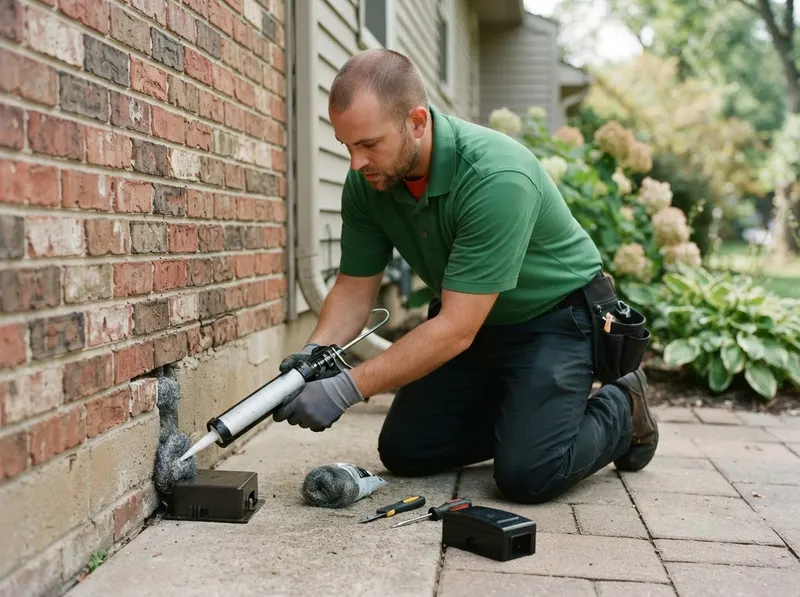
Commensal rodent control requires addressing species that live alongside human habitations, primarily utilizing food, heat, and moisture reserves found in urban residential structures. In Franklin County, weather shifts cause distinct behavioral migrations; as autumn ground temperatures decline, field-dwelling mice and sewer-adjacent Norway rats seek shelter along foundations. Homeowners in Clintonville and Worthington frequently encounter field mice navigating crawlspace vents, while stone foundation gaps common in German Village and Victorian Village provide direct conduits into basements. Effective management prioritizes exclusion over passive baiting. Open rodenticide placement inside living quarters presents secondary exposure risks to domestic animals and often results in rodents expiring inside inaccessible wall voids. To prevent this, physical exclusion utilizes non-corrosive, chew-resistant materials such as heavy-gauge galvanized hardware cloth, copper mesh, and elastomeric silicone sealants to block holes larger than 0.25 inches. Guidelines from the Centers for Disease Control and Prevention confirm that sealing entry pathways remains the primary defense against rodent-borne pathogens.
Interior extraction runs concurrently with physical sealing. Calibrated mechanical snap traps and multi-catch chambers are set inside perimeter travel corridors, pipe chases, and mechanical rooms away from child and pet pathways. This mechanical approach aligns with EPA rodent control standards, avoiding unanchored toxic baits inside living quarters. Traps are monitored at deliberate 48-to-72-hour intervals to ensure immediate removal of captured animals, reducing decomposition odors and secondary insect infestations like carpet beetles or blow flies. The Ohio Department of Agriculture regulates pest management protocols, mandating strict compliance regarding application and safety. Older housing stock in Short North, Franklinton, and Grandview Heights requires specific attention around plumbing penetrations where utility line installations have compromised floorplates. A standalone trapping program without perimeter sealing fails because neighboring colonies readily reoccupy open pathways; structural exclusion must complete the physical barrier.
Properties bordering natural corridors like the Olentangy River or the Scioto River encounter steady rodent pressure. Suburban estates in Bexley and Upper Arlington often feature mature tree canopies facilitating roof rat ingress through soffits and chimney flashing, whereas slab-on-grade builds in Hilltop more commonly reveal garage door weather-stripping failures. Addressing these points requires rigorous material selection. Standard expanding polyurethane foam is easily breached by rodent incisors; therefore, installations must incorporate blended steel mesh or concrete patches to resist gnawing. Structural integrity standards referenced by the U.S. Department of Housing and Urban Development highlight the necessity of maintaining sound wall envelopes to prevent vermin vectors. Technicians also reference sanitation benchmarks established by the Columbus Public Health department to guide property owners on removing exterior harborage like unmanaged compost piles, firewood stacks, and low-hanging bird feeders.
Work sequences follow an organized four-phase protocol. Phase one consists of a tactile survey of foundation perimeters, ridge caps, crawlspaces, and pipe chases. Phase two installs physical exclusion barriers at all identified transit points using metal flashing and elastomeric compounds. Phase three establishes an interior trap grid inside high-activity zones, recording baseline catch metrics. Phase four delivers follow-up inspections to monitor extraction progress, clear trapped specimens, and verify seal integrity until activity ceases. For operations involving attics or contaminated subfloors, reference standards from the Occupational Safety and Health Administration dictate protective equipment protocols for handling rodent guano. In multi-family dwellings, alignment with National Pest Management Association industry standards ensures complete containment across adjoining partition walls. Homeowners may submit photos of potential structural entry points by text to (216) 682-2040 for initial structural assessments, and same-day service appointments qualify for a $25 off promotional discount.
Every job gets a firm, written price after a free on-site visit.
Tell us about your commensal rodent exclusion and trapping job in Columbus and we'll send a clear, written quote, usually the same day.
 OakVanta Bug Specialists